Vybe-Check: From A Vibe To An Agreed Brief
A prompt can contain a subject, a place, a film stock, a lens, and a feeling while still leaving the important creative decisions unresolved.
Where should I look first? What makes this particular scene matter? Which details came from the reference, and which did the model invent? If I ask for another version, will it preserve the decision I liked?
Those questions became the reason I needed Vybe-Check.
I initially wanted an image-prompt enhancer: something that could take a loose description, develop relevant detail, and help choose how to realise it. As we worked on it, I asked for more intention, more context gathering, and back-and-forth refinement. I wanted it to help someone think through a frame with the judgement of a director of photography and a creative team.
The useful outcome became an agreed creative brief with reasons behind its choices. The generation prompt is one expression of that brief. An image can be the complete deliverable. A video sequence can develop from it when motion serves the idea.
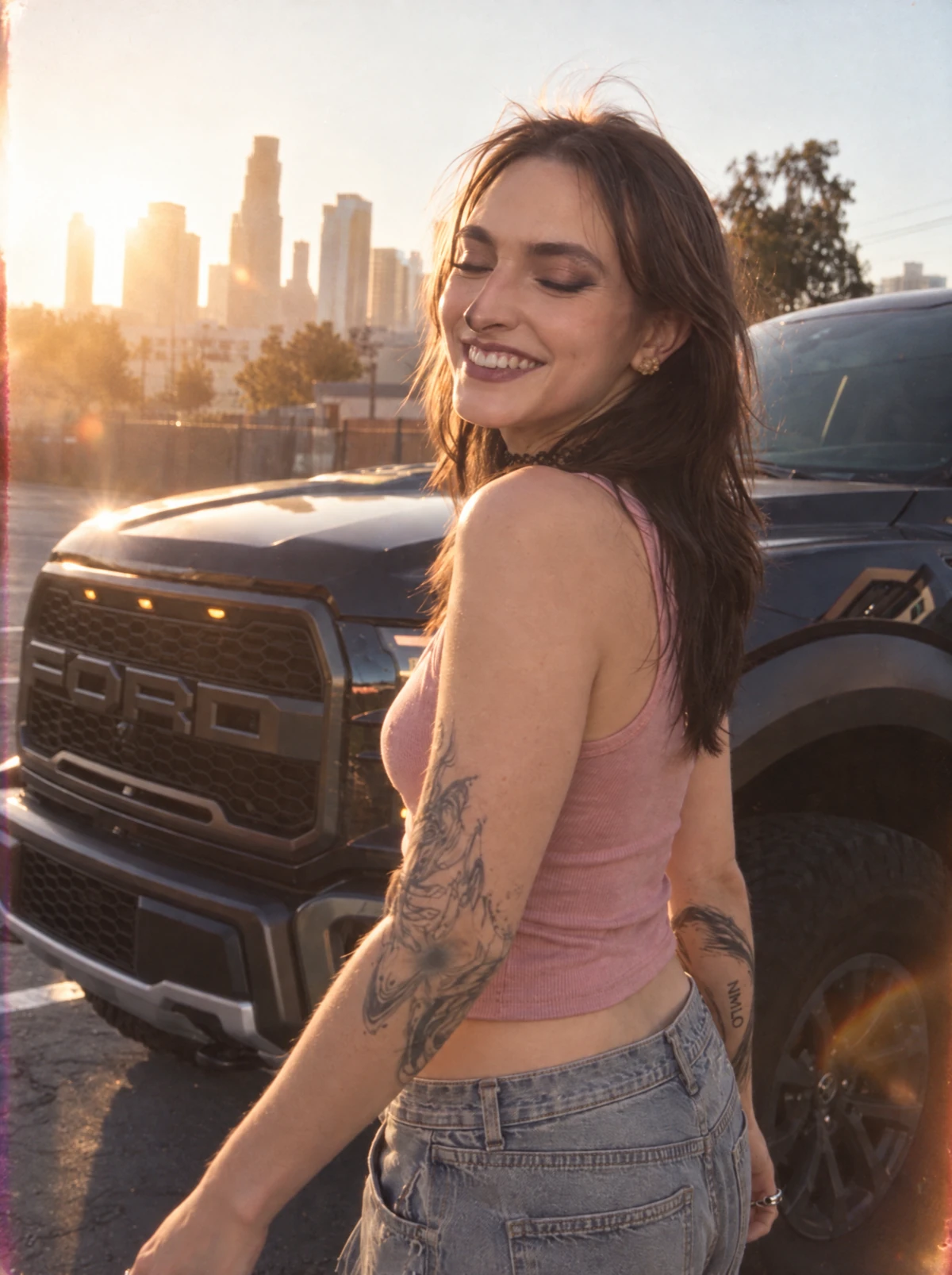
This essay follows that method through the summer shoot we developed around me and my black Raptor, then examines how the public source release candidate retains creative decisions. The figures condense the steps and their reasons into a precomputed visual replay. They use approved finished images from the Raptor test and new Higgsfield frames developed from those outputs. The raw face references and identity pack stay private.
Give The Outcome A Shape
A vibe gives us a starting direction. Turning it into a frame requires a visual priority.
The starting request was a posed photoshoot of me around my Raptor, using the original vehicle photograph and privately held identity references. We wanted several image prompts that belonged to the same shoot.
That establishes who and what should remain recognisable. It still leaves the creative relationship open: how much space should the truck occupy, how posed should I feel, and what makes the images read as a summer memory? Those choices affect composition, camera distance, light, and styling.
I want the workshop to find that choice before filling the description with decorative adjectives. The first useful question is often what should the viewer notice first? Its answer gives later decisions something concrete to serve.
Then establish the anchors. Here, there is one woman and one recognisable black Raptor. Once the summer styling is agreed, it should stay consistent across the series. Portrait framing needs to give me space while keeping the truck's proportions believable. Its cab, wheels, and bed cannot stretch to fill a tall crop.
Three kinds of information make that starting point usable:
- Outcome: What the image should do for its viewer and where it will be used.
- Priority: The relationship, action, or detail that should carry the image.
- Anchors: The supplied facts and agreed constraints that later proposals must preserve.
A reference also needs a role. A photograph might establish an object's geometry, suggest a colour relationship, or supply a lighting example. Naming that role prevents every incidental feature of the reference from becoming an instruction. A lighting reference doesn't automatically decide the wardrobe or the subject's identity.
This is the the creative work takes place inside: a bounded set of relevant material, with an explanation of what each part contributes.
Think Through The Frame
The DOP lens asks how the camera makes the intention visible.
During refinement, I asked for early-2000s hot-girl summer: a nostalgic photograph, Kodak Portra warmth, visible grain, and chromatic aberration. The subject and vehicle could stay while the photographic language changed.
The DOP translation gives that correction practical consequences. A friend's waist-height camera and a slight tilt make the viewpoint feel casual. Warm sunlight and modest flash fill can keep skin and black paint readable. Natural texture, creamy highlights, and fine grain support the film-memory feeling.
Chromatic aberration needs its own explanation. It belongs to the lens treatment near high-contrast edges; Portra film doesn't cause it. Keeping that fringing restrained lets the truck and subject remain legible. Each part of the look has a job, and each can be adjusted when it competes with the scene.
The Raptor shoot, step by step.
Start with the brief, refine the look, keep continuity, and carry the selected still into motion.
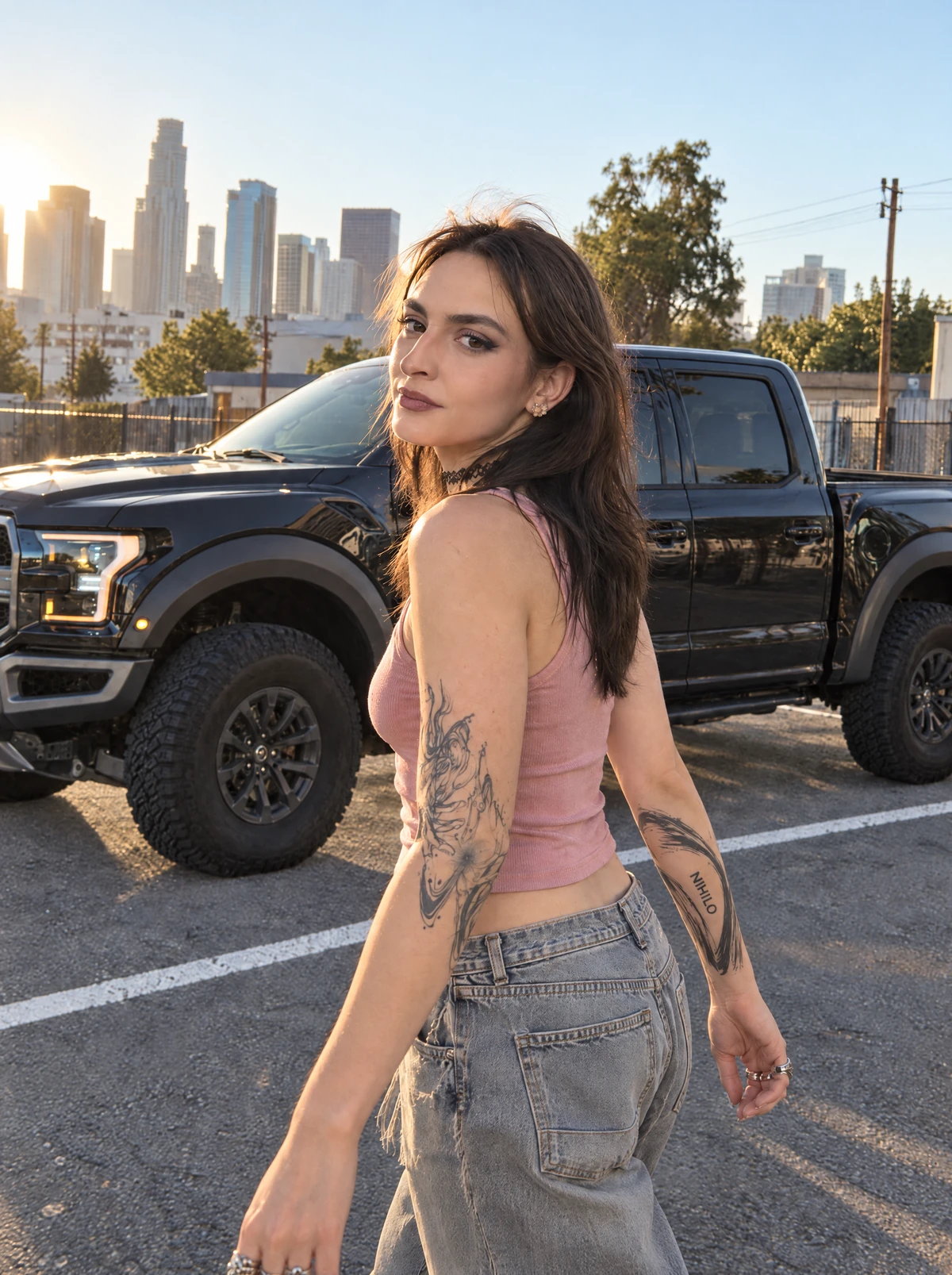
Set the briefReconstructed brief
Precomputed / Select a step to inspect its frame and the reason behind it. Add motion shows a still reconstructed from the completed walk test.
- Reason
- The original goal was posed photos of Ari around her original black Raptor: one woman and a recognisable truck.
- Framing
- Use a portrait frame without stretching the cab, wheels, and bed to fit.
- Camera
- Give the subject and the parked four-door truck room to read together.
- Light
- Leave the look open for refinement; the light serves the posed-photo brief.
- One woman
- One parked black Raptor
- Consistent summer styling
The figure steps through the shoot: establish the brief, refine the look, keep continuity, and add motion. Each step connects a reason to framing, camera, and light, with its own precomputed frame. The clean daylight treatment and the film treatment reconstruct the look comparison from the finished test image. The wider continuity view gives the cab, wheels, and bed room to read. Add motion uses a still re-rendered from the completed walk test.
These are generated illustrations of the method, with my approval to use the finished test images and generated likeness. They aren't the original version archive, and they cannot establish exact identity, body-art or vehicle fidelity. Selecting a step displays a saved image; it makes no generation request.
Other creative lenses ask related questions. Art direction considers the objects and environment that support the scene. Styling considers material, silhouette, and colour. Continuity considers what needs to remain recognisable across frames. Editing considers how neighbouring images or shots develop the same idea.
These lenses provide ways to examine a decision. The skill doesn't instantiate a separate autonomous department for each one. A useful workshop can apply several perspectives within one conversation.
The structure I want is choice, reason, consequence.
“Keep me in the foreground beside the closed front door” is a choice. “Because the image should feel like a summer moment with my truck” is its reason. “Retain the four-door cab, front wheel, and bed without stretching the vehicle” is a consequence. Together, they make the choice easier to review and preserve.
A technical term earns its place when it expresses that relationship. Focal length, depth of field, diffusion, exposure, and grain can help describe a coherent look. Their value depends on the job they perform in this frame. Stacking them without checking their relationship can make the direction harder to interpret.
Account For Where A Choice Came From
Creative development requires additions. A short brief cannot name every visible surface, gesture, and lighting relationship. The workshop needs a way to fill those gaps while retaining the difference between evidence and invention.
Vybe-Check uses four provenance labels:
- Supplied: Explicitly given by the user or an accepted reference role.
- Inferred: A contextual reading that should remain open to correction.
- Proposed: A creative addition offered for agreement.
- Generated: Material originating in a generated exploratory output.
In the Raptor shoot, the subject, vehicle, and early-2000s summer direction were supplied. A casual friend-shot reading developed from that intention. A pink tank, low-rise denim, accessories, and loose dark hair were creative styling proposals. They weren't evidence about what the identity references showed. A generated frame could become a composition reference while retaining its generated origin.
That distinction changes the conversation. The model can explain a proposed addition through the image's priority, instead of silently treating it as part of the original request. The user can keep it, change it, or reject it without disturbing the supplied anchors.
Contextual relevance is the test for an addition. What does it contribute to the intended image? Does it clarify the action, support the environment, or establish a useful visual relationship? What extra continuity burden does it introduce?
The amount of conversation should follow the information available. With a partial brief, one focused question can resolve an ambiguity that changes the image. With no useful starting detail, the skill can propose a coherent direction and a meaningful alternative. When the user delegates creative choices, it can develop them and explain the proposal.
A complete brief with an explicit request for prompts already provides agreement to proceed. The public skill treats that as a valid route into drafting. An interview should serve the unresolved decisions in the brief.
Refine What Matters
Iteration needs a target. “Make it better” gives the next version little information about what should change or survive.
The summer-film correction named a useful axis: change how the photograph feels. The subject and vehicle remained anchors while the pose loosened, the styling developed, and the camera treatment became more casual. Further refinements could lower the camera, bring the truck forward, or reduce edge fringing while retaining the choices that already worked.
I asked for that back-and-forth to be part of the skill. The prompt should be an editable working artefact that develops through agreement.
Agreement changes the record.
Illustrative agreed baseline. Try a look proposal, then agree it to retain another example revision.
Ari and her original black Raptor, plus Ari's early-2000s summer film direction. The film request came from her.
A casual friend-shot reading followed from that intent. It remained open to correction.
Camera distance, optional flash fill, and styling were proposals for expressing the supplied direction.
A study or generated frame supports the selected composition. It cannot prove exact identity or vehicle details.
Try the look refinement.
Pending previewReconstructed brief
Warm summer light around Ari and her parked black Raptor. Keep a portrait frame with a recognisable cab, wheels, and bed.
The draft matches the latest agreed example revision.
Version 1
Agreed previewReconstructed brief
Warm summer light around Ari and her parked black Raptor. Keep a portrait frame with a recognisable cab, wheels, and bed.
One woman. One parked black Raptor. Consistent summer styling.
Retained example revision history
Warm summer light around Ari and her parked black Raptor. Keep a portrait frame with a recognisable cab, wheels, and bed.
Locks: One woman. One parked black Raptor. Consistent summer styling.
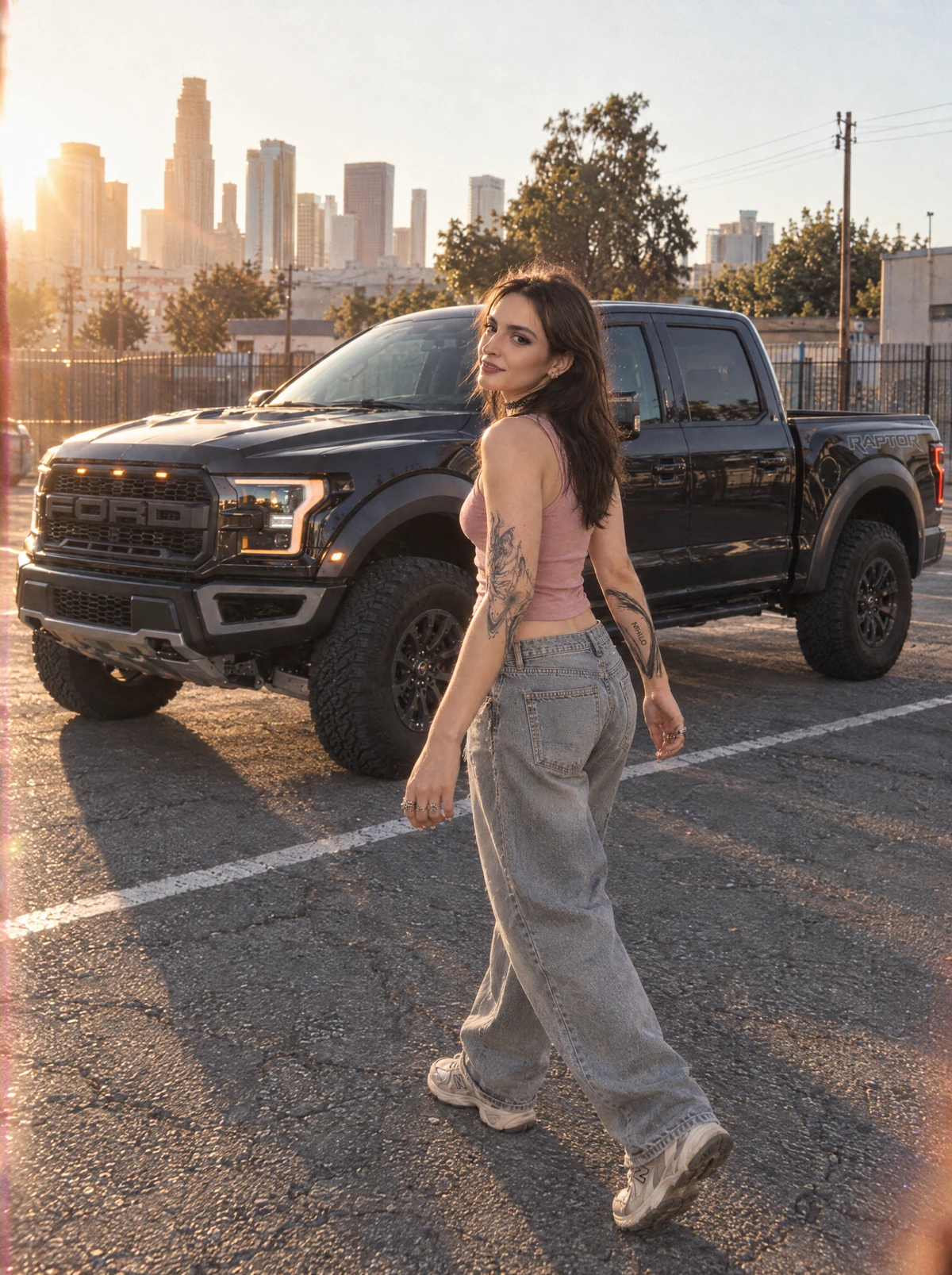
Composition studyReconstructed continuity study
Exploratory composition study
Composition only. Cannot verify identity, vehicle geometry, or markings.
Precomputed Higgsfield study from the approved finished test still. Illustrative promotion keeps its generated source and limits.
Illustrative agreed baseline ready to inspect.
- One woman
- One parked black Raptor
- Consistent summer styling
This simplified replay uses authored look summaries to demonstrate the revision mechanism. Its numbered versions are illustrative, rather than the shoot's saved archive. Changing the look updates a pending proposal and its precomputed image. Agree revision adds a version with that text and image. Earlier text, imagery and anchors remain available. Selecting an earlier version lets you inspect a prior decision without erasing what followed it.
The exploratory study is a precomputed Higgsfield composition example developed from the approved finished still. Promoting it in this replay retains the Generated label and its composition-only limitation. Agreement can make a study useful to the brief; it cannot retroactively turn generated material into a supplied fact.
This is what I want a live board to hold: the current brief, the proposed change, the accepted version, and the relevant references. It provides a shared place to inspect the creative state while the conversation continues.
The board also makes disagreement specific. “The image still feels like a campaign portrait” identifies a mismatch in photographic language. “The tall crop distorts the truck” identifies a geometry failure. Those observations give the next revision a bounded job.
Let The Still Become Motion
An agreed image brief can stand on its own. For the Raptor demo, we then took the walking-and-looking-back still direction into a 15-second sequence. The selected still provided the anchor for the motion brief.
The next question becomes what changes over time. The subject can move. The camera can move. Light, environment, and shot structure can change. Each change introduces a continuity decision, especially when the object and subject need to remain recognisable.
The skill supports three ways to think about that development:
- Preserve: Hold the scene and develop a restrained continuous action.
- Evolve: Let a continuous scene develop through a more deliberate progression.
- Multishot: Divide the intention into distinct shots with shared anchors.
Choose what changes.
Same vehicle, outfit, and film look. Compare a continuous walk, a developing frame, and three shots.
Preserve
Total duration: 15 secondsKeep the selected still as the starting composition for one continuous walk.
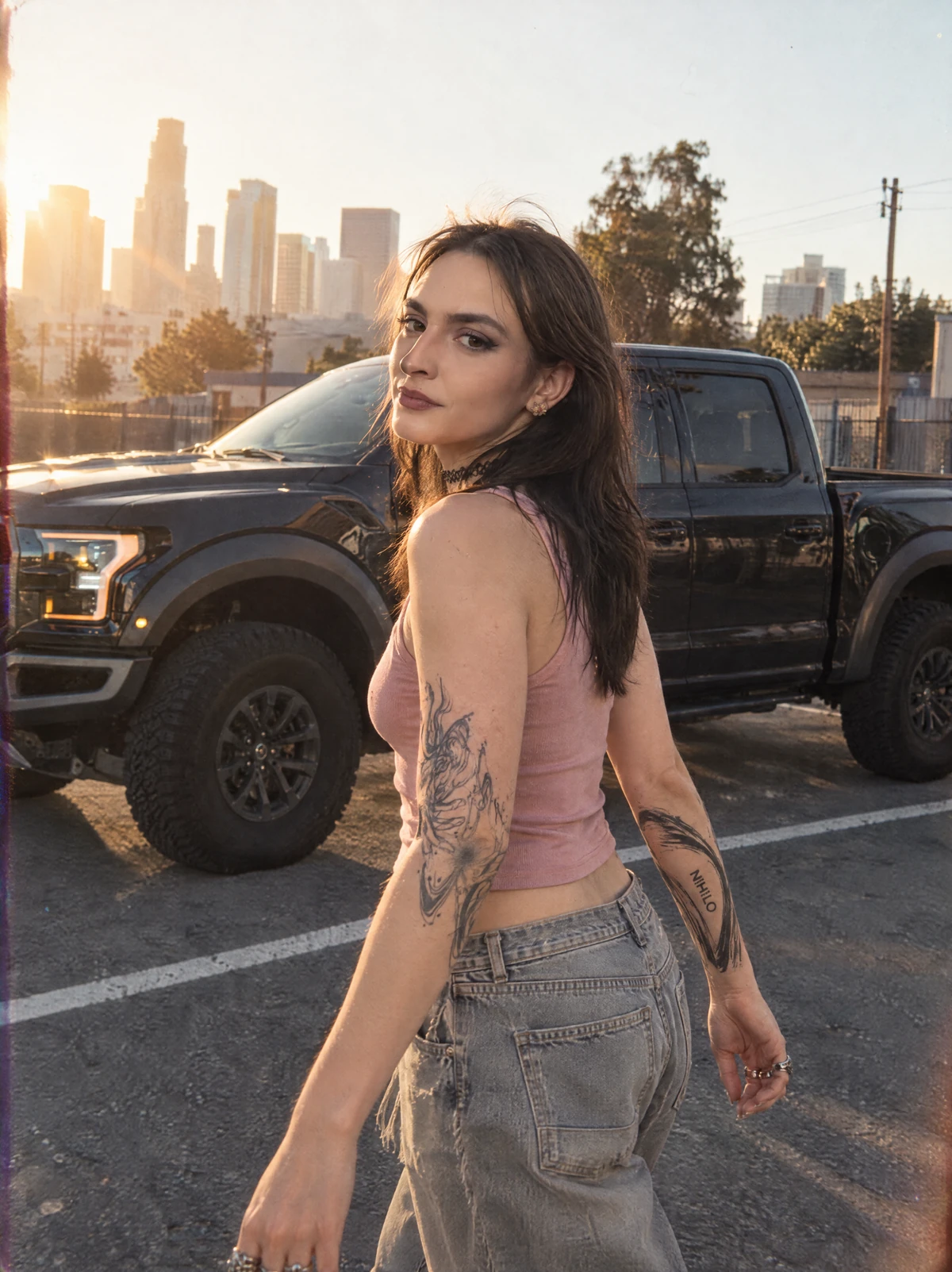
Start / Selected stillOriginal selected test still
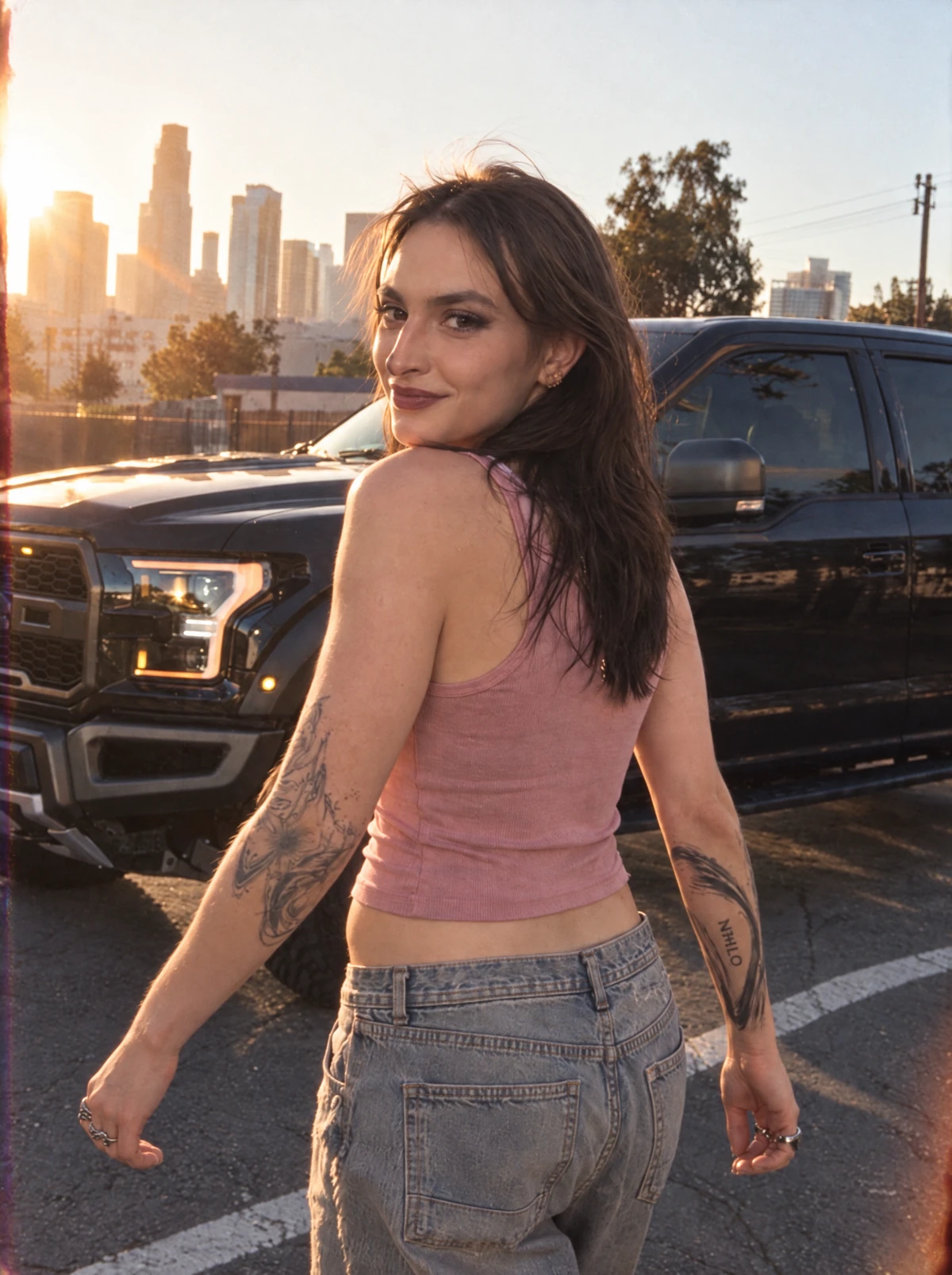
Middle / Walk and lookbackRe-rendered from walk test
Ending / Loose grinRe-rendered from walk test
Precomputed stills / The pictures illustrate the proposed sequence. The timeline below describes intended timing.
- to
Camera
Gentle camera follow beside Ari, holding the relationship to the truck.
Action
Ari walks beside the closed front door and looks back with a loose grin. The truck stays parked throughout.
- One woman
- One parked black Raptor
- Consistent summer styling
The figure compares authored 15-second continuations with three-frame storyboards. Preserve begins with the original selected test still and continues through images re-rendered from the completed walk. Evolve and Multishot combine that continuity with new proposed views. Preserve uses one continuous interval; Evolve and Multishot use three ordered intervals of five seconds. The images are precomputed stills illustrating those structures. They don't imply that all three video modes were rendered or that the provider followed the proposed timing.
The action was small and specific: walk beside the parked Raptor's closed front door, then look back at the camera with a loose grin. A gentle camera follow lets that gesture develop while retaining the relationship to the truck. The vehicle stays parked, and the summer styling and photographic treatment carry through.
A motion prompt needs a relationship between action, camera, and time. Dividing the walk into beats clarifies when the look-back happens and what the ending holds. Motion experiments also made continuity something to inspect: a coherent walk can still contain drifting subject details or changing vehicle geometry. The agreed anchors give that review a yardstick.
That timing is a proposed creative structure. It doesn't establish that a particular video model will follow every beat. An output still needs to be inspected against the brief. Sound belongs in the direction when it is requested; these examples leave it unspecified.
How The Runtime Holds The Method
The public candidate separates conversational judgement from state changes. The skill gives a host agent instructions for gathering context, developing choices, and refining prompts. The Python runtime supplies the board, saved state, validation, and exports. The host supplies the conversational model. That division lets the method stay recognisable when the host changes. Skill source.
A session records a brief, choices, provenance, locks, image versions, video versions, pending drafts, studies, and assets. Its revision number identifies the current state. The event interface permits named actions with validated payload fields, so a caller requests a particular change rather than replacing an arbitrary session document.
For example, proposing a brief, resolving its choices, and agreeing it are separate actions. The ordinary agreement path requires a proposed brief with no unresolved choices. The direct-image path supports a complete, explicit brief. Both routes give the runtime an agreed basis for image versions.
The concurrency boundary is equally specific. A mutation supplies its expected revision. Under a write lock, the runtime rereads the saved session and compares revisions. A mismatch raises a conflict. Two browser actions based on the same old state therefore cannot both silently overwrite the current session through that interface.
Writing uses a temporary file in the same directory, flushes and syncs its bytes, and replaces the destination. This supplies atomic replacement of each file. Media-registry and session updates still span separate files, so this mechanism doesn't establish a multi-file database transaction. Workshop implementation.
A Draft Keeps Its Parent
A browser edit records its target, text, base revision, and base version. The base version matters because the selected image can change while a draft remains pending.
Accepting an image draft appends from the named parent version. It preserves that parent's settings, locks, and provenance while applying the accepted text. The runtime retains earlier versions and changes the selection to the new one. A video draft similarly keeps its named parent relationship.
This is the technical expression of the refinement method: the proposal has an origin, acceptance creates another version, and previous decisions remain inspectable. The store validates these relationships. Editorial review still determines whether the new words actually serve the image.
Video creation starts from the selected agreed image version. It records the source image relationship and copies its locks and provenance into the motion version. Mode, duration, motion, camera direction, and accepted generation settings become explicit inputs. The runtime can construct the timed prompt structure; it makes no claim that an eventual renderer will obey it. Runtime reference.
An Export Has A Smaller Boundary
A working session contains more context than a portable prompt needs. The export selects an agreed image or video version and admits a bounded set of fields: prompt text, shots, settings, locks, version information, and the relevant source-image relationship.
Private media-registry paths, reference bytes, and the full session stay outside that export. Recognised credential and local-path forms are cleaned from exported strings. That filtering has a practical limit: names and semantic identity details can still appear in perfectly ordinary prose. The user should inspect the exported text before sharing it. Export implementation.
The same boundary applies to the board. It binds to loopback and exposes registered media through opaque identifiers. Its URL provides access to the local session. Local binding cannot protect against a compromised account or other software running as the same user. Saved session files are ordinary local files; the conversational host has its own data-handling behaviour.
Give Optional Tools A Defined Job
The core workshop needs no API key. Optional tools have narrower jobs and explicit prerequisites.
Local image studies can help compare framing, light, and colour while a direction develops. The candidate inspects a configured loopback ComfyUI service, including its checkpoint and installed nodes, and restricts the supported graph to an allowed core workflow. Unknown nodes refuse. A loopback address alone cannot establish what third-party software does with its inputs.
That supported workflow uses text conditioning. Registered reference images aren't silently supplied as conditioning. A study therefore cannot certify an exact person, object, or reference match. Its generated provenance remains visible when promoted. A promising study can inform a creative choice while the reference-fidelity question remains open.
Optional decision advice through Jev has a different job: evaluate a bounded question and its options. Its decision and probabilities can inform discussion. It writes no prose and cannot accept a draft, alter agreed prompt bytes, change locks, or submit generation.
Both advice routes currently remain unavailable in this candidate because complete verified primary billing bounds have not been established. Judge implementation.
That route requires inspected anonymous outbound strings, explicit bounded approval, verified current billing information, and a user-selected ceiling. Keys use the explicit native-store adapter. Native access can be denied or unavailable; the runtime refuses a plaintext fallback. Windows credential roaming depends on account and organisation policy. These are operating conditions to verify on the actual host. Privacy and optional services.
The published source is version 0.1.0rc1. Its source controls and tests document implemented behaviour. The release-verification contract still requires independent evidence from installed native environments and foreground creative scenarios. Those criteria remain open in the public candidate. It also supplies no paid image/video submission command. The prompts can be copied into the chosen generation tool. Candidate verification.
Carry The Method Into The Next Brief
The method is portable: define the outcome, choose a visual priority, establish anchors, develop relevant proposals, and retain the decisions as you refine. Use the DOP and creative-team lenses to examine consequences. Continue into motion when the idea calls for it.
I needed a tool that could hold that conversation and keep its agreed result available. The practical measure is whether a later version can explain what it changed, why it changed, and what it preserved.
Start with the Creative Direction Worksheet. It gives one image a place to begin and one revision a clear target. The agent context pack carries the method in a neutral form. The public source candidate contains the skill and runtime described here.
[ comments ]
guests welcome. members show first in the list
no comments yet. start the thread_